English
- English
- Español
- Português
- русский
- Français
- 日本語
- Deutsch
- tiếng Việt
- Italiano
- Nederlands
- ภาษาไทย
- Polski
- 한국어
- Svenska
- magyar
- Malay
- বাংলা ভাষার
- Dansk
- Suomi
- हिन्दी
- Pilipino
- Türkçe
- Gaeilge
- العربية
- Indonesia
- Norsk
- تمل
- český
- ελληνικά
- український
- Javanese
- فارسی
- தமிழ்
- తెలుగు
- नेपाली
- Burmese
- български
- ລາວ
- Latine
- Қазақша
- Euskal
- Azərbaycan
- Slovenský jazyk
- Македонски
- Lietuvos
- Eesti Keel
- Română
- Slovenski
- मराठी
- Srpski језик

How Does a Single Door Wall Mounted Electrical Enclosure Improve Safety?
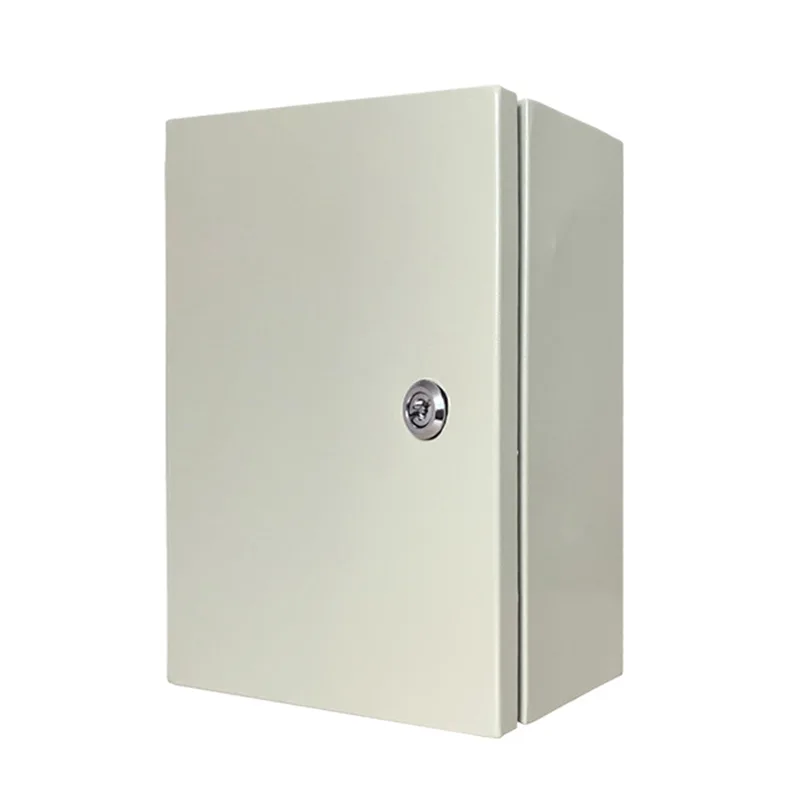
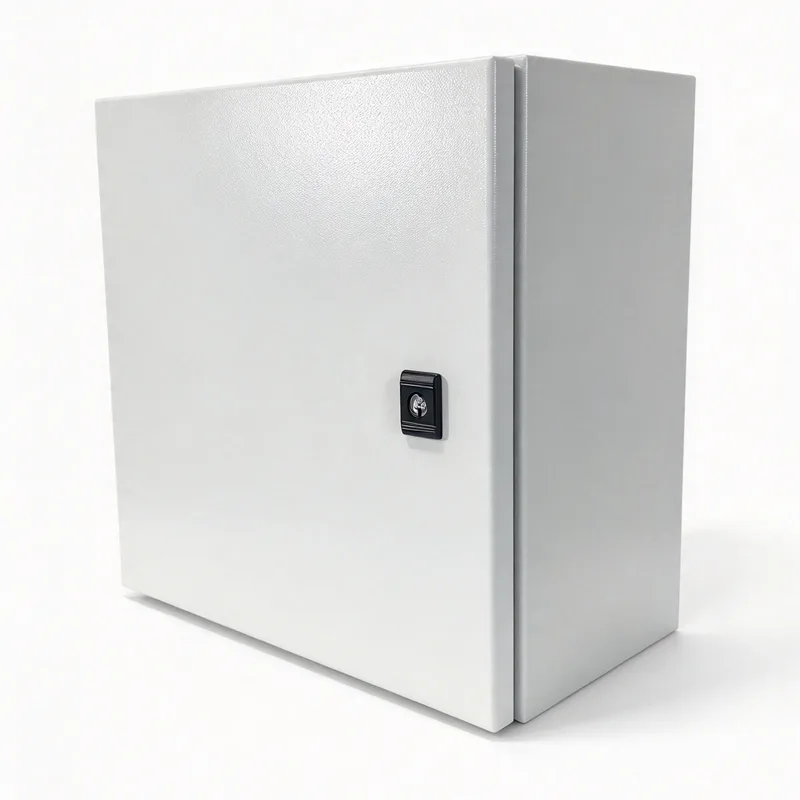
A Single Door Wall Mounted Electrical Enclosure improves electrical safety by providing a protective housing for circuit breakers, PLC modules, relays and wiring terminals. Its steel structure, reinforced edges, sealing design and corrosion-resistant surface treatment help reduce exposure to dust, accidental contact and environmental damage. At Shangming, we manufacture wall-mounted electrical enclosures with practical dimensions, customizable configurations and quality inspection procedures for industrial power distribution applications.
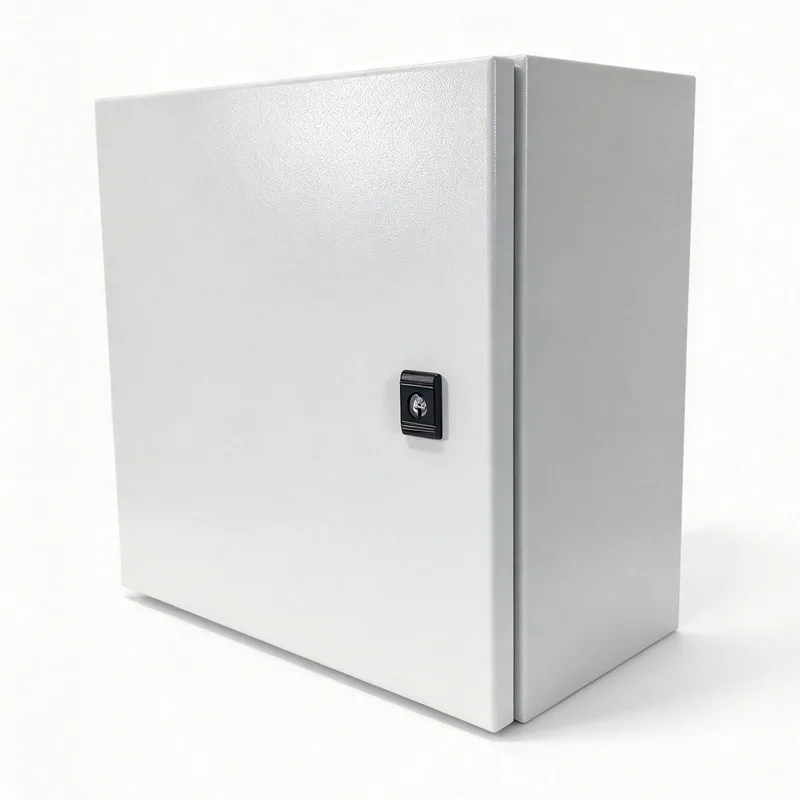
Table of Contents
- How Does a Single Door Wall Mounted Electrical Enclosure Improve Safety?
- 1. Strong Steel Structure for Reliable Component Protection
- 2. Sealing Design and Environmental Protection
- 3. Anti-Corrosion Treatment for Longer Service Life
- 4. Practical Installation and Internal Space Planning
- 5. Quality Control and Customization at Shangming
- 6. Typical Industrial Applications
- 7. How to Select the Right Wall Mounted Electrical Enclosure
- Frequently Asked Questions
How Does a Single Door Wall Mounted Electrical Enclosure Improve Safety?
In industrial power distribution systems, electrical safety depends on more than the quality of circuit breakers and control components. The enclosure protecting these devices also plays an important role. Dust accumulation, moisture, accidental contact and mechanical damage can all affect the stability of electrical equipment if the housing is not properly designed.
At Shangming, we manufacture electrical distribution box and cabinet enclosures, as well as high and low voltage complete sets of electrical equipment. Our experience in electrical enclosure production has shown us that a practical enclosure should address three basic requirements: mechanical protection, suitable environmental protection and convenient installation.
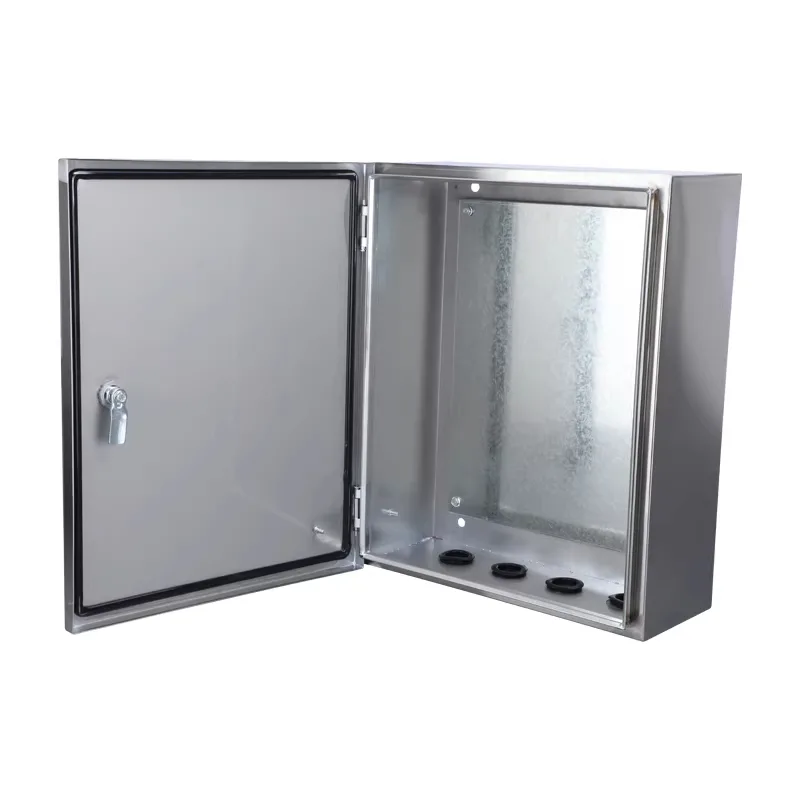
Our Single Door Wall Mounted Electrical Enclosure is designed for housing small and medium-sized electrical components in industrial control and power distribution applications. The standard model measures 400 × 400 × 210 mm and uses cold rolled steel with an integral stamping structure.
Its safety value comes from several coordinated design features rather than one isolated component. The steel body provides a physical barrier, the door sealing strip helps limit dust and moisture entry, and the internal space accommodates electrical devices and wiring in an organized arrangement.
1. Strong Steel Structure for Reliable Component Protection
The enclosure body is the first line of mechanical protection for internal electrical components. In actual industrial installations, a cabinet may carry circuit breakers, terminal blocks, relays and control modules while remaining fixed to a wall for long periods.
We use cold rolled steel plates and integral stamping forming technology to produce our single door enclosure. Compared with poorly reinforced thin-shell structures, a properly formed body with reinforced edges provides better resistance to deformation during handling, installation and normal service.
For wall-mounted applications, structural stability deserves particular attention. If the cabinet body or mounting area deforms, the door may no longer align correctly with the frame. This can affect door operation and sealing performance. We therefore pay attention to the formed edges, cabinet geometry and mounting structure during production.
| Structural Feature | Design Description | Practical Safety Benefit |
|---|---|---|
| Cold Rolled Steel | Steel sheet enclosure construction | Provides a rigid physical housing for electrical components |
| Integral Stamping | Formed body structure with reinforced edges | Helps maintain cabinet shape during installation and service |
| Single Door Design | One front access door with a fitted frame | Provides convenient access for inspection and maintenance |
| Wall Mounting Structure | Reserved mounting holes and fixed installation points | Supports stable positioning when correctly installed |
Another important consideration is the cabinet's relationship with the electrical installation. A metal enclosure must be incorporated into the protective earthing arrangement where required by the applicable electrical design. The enclosure itself does not replace circuit protection, insulation or proper grounding. These measures must work together to reduce electrical hazards.
2. Sealing Design and Environmental Protection
Dust and moisture are common concerns in workshops, equipment rooms and industrial production areas. Fine dust can accumulate around terminals and ventilation openings, while moisture entering through poorly fitted doors or cable openings may accelerate corrosion and affect electrical connections.
To address these conditions, our wall-mounted electrical enclosure uses a fitted rubber sealing strip between the door and cabinet frame. Compared with a basic adhesive seal that is not properly matched to the frame, a well-fitted sealing structure provides more consistent contact when the door is closed.
We also consider the relationship between door alignment, sealing-strip compression and cable entry positions. Even a good sealing strip cannot provide reliable protection if the door is distorted or cable openings are left untreated.
When selecting an enclosure for an installation, we recommend checking the following details:
- Door and frame alignment: The door should close evenly without obvious gaps.
- Sealing strip condition: The gasket should remain continuous and properly positioned around the sealing area.
- Cable entry treatment: Suitable cable glands or sealing accessories should be used for wiring openings.
- Installation environment: Indoor workshops and exposed outdoor locations require different protection configurations.
- IP protection level: The required rating should be confirmed through the corresponding test documentation.
According to IEC 60529, the IP code classifies the protection provided by an enclosure against access to hazardous parts, solid foreign objects and water ingress. We do not recommend assuming an IP rating based only on the presence of a rubber sealing strip. The actual rating must be supported by the relevant test results.
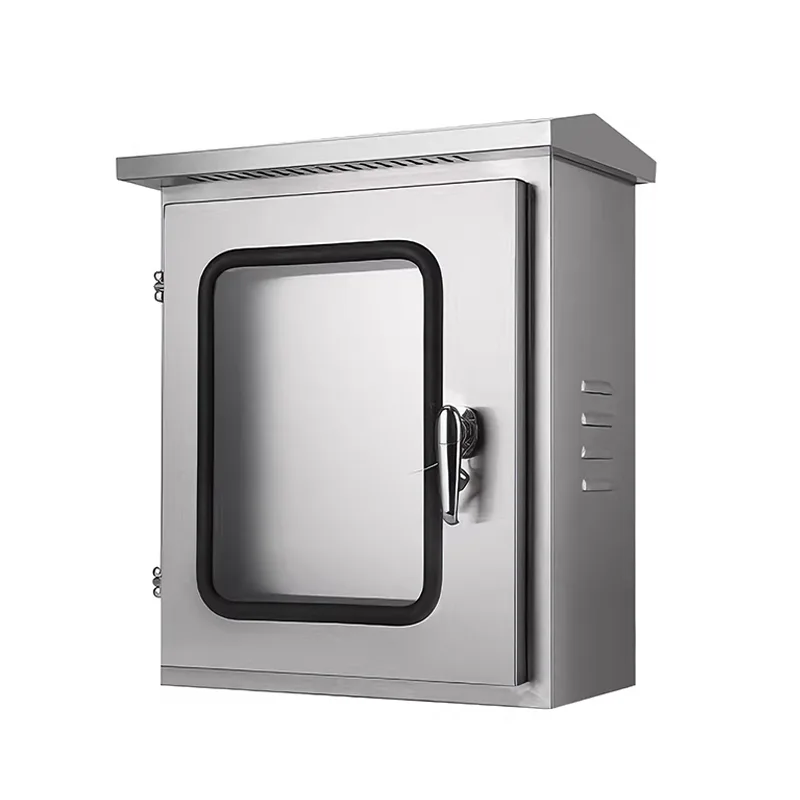
For applications requiring a higher level of environmental protection, we also provide alternative solutions such as the IP65 Outdoor Distribution Box Enclosure and Waterproof Distribution Box Enclosure.
3. Anti-Corrosion Treatment for Longer Service Life
Steel enclosures used in industrial environments need suitable surface protection. Humidity, condensation, airborne contaminants and occasional chemical exposure can gradually damage untreated steel surfaces. Once corrosion develops, it may affect the cabinet's appearance, surface integrity and long-term maintenance requirements.
At Shangming, we use a multi-step surface treatment process for our steel electrical enclosures. Each stage has a specific purpose, and the quality of the final coating depends on the preparation carried out beforehand.
| Process Stage | Manufacturing Operation | Purpose |
|---|---|---|
| Step 1: Pickling | Removes surface rust, oil stains and oxide layers | Creates a cleaner metal surface for subsequent treatment |
| Step 2: Phosphating | Forms a conversion coating on the steel surface | Improves adhesion of the following paint layer and supports corrosion protection |
| Step 3: Electrostatic Powder Spraying | Applies powder coating to the enclosure surface | Provides a uniform protective and decorative finish |
| Step 4: High-Temperature Curing | Cures the applied powder coating | Forms a durable coating with improved surface resistance |
From our production experience, coating quality is not determined by color or surface appearance alone. We also pay attention to coating coverage around edges, corners and formed sections, where uneven application or missed areas can become weak points.
This treatment approach makes the enclosure suitable for many indoor industrial environments, including workshops, equipment rooms and general manufacturing facilities. For outdoor or chemically aggressive locations, the coating system and overall enclosure protection should be selected according to actual exposure conditions.
4. Practical Installation and Internal Space Planning
An electrical enclosure should not only protect components after installation. It should also make the installation process and future maintenance more manageable. Poor internal space planning can result in crowded wiring, difficult component access and unnecessary maintenance time.
Our standard Single Door Wall Mounted Electrical Enclosure measures 400 × 400 × 210 mm. This size provides a practical internal space for many small and medium-sized control and distribution arrangements, depending on the dimensions and layout of the selected components.
Typical components that can be arranged inside include:
- Programmable logic controller (PLC) modules
- Miniature circuit breakers and other protective devices
- Control relays and contactors
- Wiring terminals and connection accessories
- DIN rails and internal mounting supports
| Product Parameter | Standard Configuration |
|---|---|
| Product Name | Single Door Wall Mounted Electrical Enclosure |
| Standard Dimensions | 400 × 400 × 210 mm |
| Main Material | Cold Rolled Steel |
| Manufacturing Process | Integral Stamping Forming |
| Door Configuration | Single Door |
| Mounting Type | Wall Mounted |
| Surface Treatment | Pickling, Phosphating and Electrostatic Powder Coating |
| Customization | Dimensions, Color, Logo, Openings and Internal Accessories |
Before installation, we recommend checking the actual component dimensions, cable bending space, wiring routes and heat dissipation requirements. A cabinet that fits the components physically may still be unsuitable if there is insufficient clearance for wiring or ventilation.
Our detachable door structure and reserved mounting holes help simplify field installation and maintenance. For projects with special layouts, we can also adjust mounting positions, internal accessories and cable entry openings according to the supplied drawings or technical requirements.
5. Quality Control and Customization at Shangming
As a professional electrical equipment manufacturer located in Yueqing, Wenzhou, known as China's Electrical Capital, Shangming benefits from the region's established electrical manufacturing supply chain. We integrate research and development, production and sales to provide distribution box enclosures and electrical equipment for different industrial applications.
Our quality control process covers multiple production stages rather than relying only on a final appearance inspection. We inspect incoming materials, monitor forming and welding operations, and check the coating and assembly condition before finished products are delivered.
For enclosure production, our main inspection concerns include:
- Steel sheet condition and material consistency
- Cabinet dimensions and formed edge accuracy
- Door alignment and opening and closing operation
- Sealing strip installation and contact condition
- Powder coating coverage and surface appearance
- Relevant waterproof, dustproof and salt spray test requirements
We also understand that standard dimensions do not suit every control system. Different projects may require additional cable openings, specific mounting arrangements or customized internal component supports. Our customization services cover the following areas:
| Customization Item | Available Options | Typical Application |
|---|---|---|
| Cabinet Dimensions | Customized length, width and depth | Different equipment installation spaces |
| Mounting Structure | Adjusted wall mounting hole positions | Project-specific installation layouts |
| Surface Finish | Customized cabinet colors and coating options | Equipment identification and project specifications |
| Logo and Marking | Silk-screen printing and laser marking | Brand identification and technical labeling |
| Internal Accessories | Mounting rails, brackets, partitions, locks and hinges | Different control and distribution configurations |
| Opening Positions | Custom openings for cable glands, sockets and instruments | Specific wiring and equipment connections |
For customized projects, we recommend confirming the component layout and cable entry positions before production. This helps reduce unnecessary modifications during installation and makes the finished enclosure more compatible with the overall electrical system.
Learn more about our manufacturing capabilities and product range on the Distribution Box Enclosure page.
6. Typical Industrial Applications
A single-door wall-mounted cabinet is particularly useful when electrical components need a dedicated protective housing without occupying the floor space required by a large distribution cabinet. Its compact structure makes it suitable for localized control and distribution points across different industrial facilities.
Based on the product's construction and available configuration options, typical application areas include:
- Water Treatment Facilities: Housing selected control components, relays and terminal connections for pumps and auxiliary equipment.
- Automotive Equipment: Providing a dedicated enclosure for control circuits and machine-related electrical components.
- Fire Safety Systems: Organizing selected monitoring and control connections where the project specification permits this enclosure type.
- Mechanical Manufacturing: Protecting local electrical control devices installed near production machinery.
- Rail Transit Supporting Equipment: Accommodating selected auxiliary electrical components according to project requirements.
- Petrochemical Facilities: Supporting suitable non-hazardous-area installations when the enclosure's protection and material specifications meet site requirements.
One point we always emphasize is that the enclosure must match the installation environment. For example, a general-purpose wall-mounted steel cabinet should not automatically be used in an explosive atmosphere or an area with direct high-pressure water exposure. Such applications require specifically designed and verified equipment.
For larger electrical distribution projects, our product range also includes High and Low Voltage Switchgear, Floor-Standing Power Distribution Cabinet Enclosures and other electrical equipment.
7. How to Select the Right Wall Mounted Electrical Enclosure
When selecting a wall-mounted electrical enclosure, we suggest evaluating the complete installation rather than choosing a cabinet based only on its external dimensions or price. The following points help avoid common specification mismatches.
- Confirm the component arrangement. List the PLC modules, breakers, relays, terminals and other devices that need to be installed.
- Check the internal dimensions. Allow enough space for cable routing, component clearance and future maintenance.
- Identify the operating environment. Consider indoor or outdoor installation, humidity, dust, temperature and possible chemical exposure.
- Specify the required IP rating. Select the protection level according to the site conditions and applicable standards, and request corresponding test evidence.
- Review the mounting arrangement. Confirm wall strength, fixing positions, cabinet weight and installation clearance.
- Confirm electrical safety requirements. Check earthing, cable entry, insulation, overcurrent protection and applicable local electrical regulations.
- Discuss customization before production. Provide drawings, component lists and opening positions to ensure the cabinet matches the project layout.
In our experience, confirming these details at the beginning of a project is more efficient than modifying the enclosure after the electrical components have been installed.
Frequently Asked Questions
1. What electrical components can be installed in a 400 × 400 × 210 mm enclosure?
This standard size can accommodate many small and medium-sized electrical components, including PLC modules, circuit breakers, relays and wiring terminals. The actual capacity depends on the component dimensions, DIN rail arrangement, cable routing and required maintenance clearance.
2. How does a single-door electrical enclosure help prevent electrical accidents?
It provides a physical housing that helps prevent accidental contact with internal electrical components and reduces their exposure to environmental contaminants. However, safe operation also requires proper grounding, suitable circuit protection, correct wiring and appropriate access control.
3. Is a cold rolled steel electrical enclosure suitable for industrial environments?
Yes. Cold rolled steel provides a rigid structure for many industrial control and distribution applications. With appropriate surface preparation and powder coating, it also offers improved resistance to corrosion and everyday surface wear. The final suitability depends on the actual operating environment.
4. Can the wall mounted electrical enclosure be customized?
Yes. We support customization of cabinet dimensions, wall mounting positions, surface colors, logo printing, cable openings, locks, hinges and internal accessories. Drawings or component layout information help us evaluate the required configuration.
5. Does a sealing strip automatically mean the enclosure meets IP65 requirements?
No. A sealing strip is only one part of the enclosure's ingress protection design. The complete structure, door fit, cable entries and other openings also affect performance. An IP65 claim must be supported by applicable testing and documentation in accordance with IEC 60529.
6. What is the difference between a wall-mounted enclosure and a floor-standing distribution cabinet?
A wall-mounted enclosure is generally used for compact electrical control or distribution points and helps save floor space. A floor-standing cabinet provides more internal volume for larger equipment arrangements, multiple circuits and more complex power distribution systems.
7. How should an electrical enclosure be maintained?
Maintenance should include checking door alignment, sealing strip condition, coating damage, mounting fasteners and cable entry seals. Before opening the cabinet for internal inspection, qualified personnel should follow the applicable isolation, lockout and verification procedures.
Conclusion: Reliable Enclosure Design Starts with Practical Details
A well-designed Single Door Wall Mounted Electrical Enclosure contributes to electrical safety through a combination of mechanical strength, suitable sealing, corrosion protection and practical installation design. These details help protect internal components and support more organized maintenance in industrial environments.
At Shangming, we focus on manufacturing electrical enclosures that meet practical project requirements. From our standard 400 × 400 × 210 mm cold rolled steel model to customized cabinet dimensions, openings and internal accessories, we work with customers to match enclosure configurations to their actual equipment layouts.
If you are planning an industrial control or power distribution project, you can explore our Single Door Wall Mounted Electrical Enclosure or visit our company profile to learn more about Shangming's manufacturing capabilities.
Send us your required dimensions, installation environment and component layout. Our team can review the technical requirements and discuss a suitable enclosure configuration for your project.
Related News
- How Does a 6000-Cycle LiFePO4 Battery Improve Energy Storage?
- Why Single Door Wall Mounted Electrical Enclosure Matters in Modern Power Distribution
- How Single Door Wall Mounted Electrical Enclosure Supports Smart Building Growth
- What Makes a Carbon Steel Distribution Box Enclosure Reliable for Modern Power Systems?
- How Does a Wall Mounted Metal Electrical Distribution Box Improve Electrical Safety?
- How Does a Stainless Steel Distribution Cabinet Improve Electrical Safety and System Performance?
Leave me a message
New Products


News Recommendations