English
- English
- Español
- Português
- русский
- Français
- 日本語
- Deutsch
- tiếng Việt
- Italiano
- Nederlands
- ภาษาไทย
- Polski
- 한국어
- Svenska
- magyar
- Malay
- বাংলা ভাষার
- Dansk
- Suomi
- हिन्दी
- Pilipino
- Türkçe
- Gaeilge
- العربية
- Indonesia
- Norsk
- تمل
- český
- ελληνικά
- український
- Javanese
- فارسی
- தமிழ்
- తెలుగు
- नेपाली
- Burmese
- български
- ລາວ
- Latine
- Қазақша
- Euskal
- Azərbaycan
- Slovenský jazyk
- Македонски
- Lietuvos
- Eesti Keel
- Română
- Slovenski
- मराठी
- Srpski језик

How Does a 6000-Cycle LiFePO4 Battery Improve Energy Storage?
A long cycle life is one of the most important factors when selecting a lithium battery for solar and stationary energy storage. A LiFePO4 battery rated for 6,000+ cycles at 80% depth of discharge can reduce replacement frequency and improve long-term energy storage economics. In this article, we examine how a 51.2V 200Ah battery with 10.24kWh rated energy supports residential solar systems, off-grid installations, telecom backup power, and small commercial applications. We also explain the role of battery management systems, operating temperature, and system compatibility in achieving reliable performance.
Table of Contents
- How Does a 6000-Cycle LiFePO4 Battery Improve Energy Storage?
- Key Specifications of a 51.2V 200Ah Lithium Battery
- What Factors Affect LiFePO4 Battery Cycle Life?
- How Does BMS Protection Support Long-Term Performance?
- Where Can a 10kWh LiFePO4 Battery Be Used?
- What Should Be Considered When Selecting an Energy Storage Battery?
- Shangming Electric's Energy Storage Solutions
- Frequently Asked Questions
How Does a 6000-Cycle LiFePO4 Battery Improve Energy Storage?
When we evaluate an energy storage battery, we look beyond its initial capacity. The number of charge and discharge cycles it can complete, how consistently it delivers power, and how well its battery management system controls operating conditions all influence its long-term value.
A LiFePO4 battery rated for more than 6,000 cycles at 80% depth of discharge (DOD) is designed for applications involving frequent daily charging and discharging. Unlike a backup battery that may remain on standby for extended periods, a solar energy storage battery can go through a charge-discharge cycle almost every day.
For example, consider a residential solar installation that charges its battery during daylight hours and supplies electricity to household appliances in the evening. A battery with a longer cycle life can support this repeated operating pattern over an extended service period, reducing the need for frequent battery replacement.
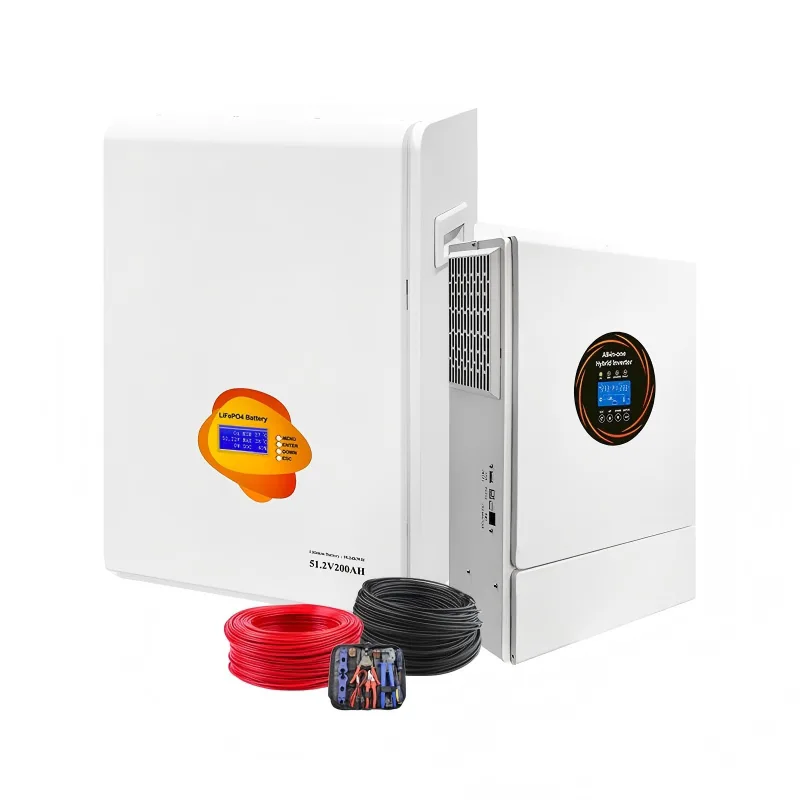
Our LiFePO4 lithium battery solutions include the LiFePO4 6000 Cycles 10KWh 51.2V 200Ah Lithium Battery, developed for residential solar storage, backup power, off-grid systems, and light commercial energy storage.
Why Does Cycle Life Matter in Daily Energy Storage?
Cycle life indicates how many charge-discharge cycles a battery can complete before its remaining capacity reaches a specified end-of-life threshold. It should always be evaluated together with the DOD, temperature, charging and discharging rates, and capacity retention criteria used in the test.
For this battery, the stated cycle life is 6,000+ cycles at 80% DOD. This means the battery is designed to deliver a long operating life under the specified cycling conditions. Actual service life will depend on installation, operating conditions, and system settings.
For a simple illustration, 6,000 daily cycles would represent approximately 16.4 years of cycling. This is a mathematical illustration rather than a guaranteed service-life prediction, since calendar aging and real operating conditions also affect battery performance.
Key Specifications of a 51.2V 200Ah Lithium Battery
Voltage and capacity determine how a battery fits into an energy storage system. A 51.2V 200Ah LiFePO4 battery belongs to the 48V-class storage category and provides 10.24kWh of nominal energy.
Its electrical configuration consists of 16 series-connected LiFePO4 cells, each with a nominal voltage of 3.2V. This configuration provides a stable voltage platform for compatible solar inverters and stationary energy storage equipment.
| Parameter | Specification |
|---|---|
| Battery Chemistry | Lithium Iron Phosphate (LiFePO4) |
| Nominal Voltage | 51.2V |
| Rated Capacity | 200Ah |
| Rated Energy | 10.24kWh |
| Cell Configuration | 16S, 3.2V per cell |
| Cycle Life | 6,000+ cycles at 80% DOD |
| Cell Grade | Grade A, new cells |
| BMS | Automotive-grade BMS with active balancing |
| Protection Rating | IP65 |
| Operating Temperature | -20°C to 55°C |
| Low-Temperature Option | Optional -30°C heating function |
| Round-Trip Efficiency | More than 95% |
| Warranty | 5 years standard, extendable |
One detail worth checking during system design is the difference between nominal energy and usable energy. Although this battery provides 10.24kWh of rated energy, the actual energy available to connected loads depends on the permitted DOD, inverter efficiency, BMS limits, and operating conditions.
What Factors Affect LiFePO4 Battery Cycle Life?
A high cycle-life rating is valuable, but it does not mean every battery will achieve the same results under all operating conditions. In our experience with energy storage product selection, three factors deserve particular attention: depth of discharge, temperature, and charging or discharging current.
1. Depth of Discharge
DOD represents the percentage of a battery's rated capacity used during a discharge cycle. For a 200Ah battery, an 80% DOD corresponds to 160Ah of discharged capacity, leaving approximately 40Ah of nominal capacity unused.
Operating within a suitable DOD range helps control battery aging. For residential solar storage, users should configure the inverter and BMS according to the battery manufacturer's recommended charging and discharging limits rather than routinely forcing the battery to its lowest voltage.
2. Operating Temperature
Temperature has a direct influence on battery aging and charging behavior. High operating temperatures can accelerate capacity degradation, while charging lithium batteries at excessively low temperatures can create additional risks.
The battery's specified operating temperature range is -20°C to 55°C, with an optional low-temperature heating function for environments reaching -30°C. The heating option is particularly relevant for installations in cold regions, where the BMS-controlled heating process can help bring the cells into a suitable charging temperature range.
We recommend confirming the separate charging and discharging temperature limits before installation, especially for outdoor solar systems exposed to seasonal temperature changes.
3. Charging and Discharging Rates
Charging and discharging current should match the battery's rated limits and the connected inverter's power requirements. Repeatedly operating at excessive current can increase internal heat and place additional stress on battery cells.
For this reason, we recommend checking the battery's maximum continuous charge current, discharge current, and peak current with the technical specification sheet before finalizing an inverter or parallel battery configuration.
How Does BMS Protection Support Long-Term Performance?
The battery management system (BMS) is an important part of a stationary lithium battery. It monitors cell conditions and controls battery operation to prevent individual cells from exceeding their permitted operating limits.
In a 16S LiFePO4 battery pack, even small differences in individual cell voltage can affect the usable capacity of the complete battery. An active balancing function helps manage these differences and supports better voltage consistency across the battery pack.
Our 51.2V 200Ah battery uses an automotive-grade BMS with active balancing and multiple protection functions. These functions are especially important in systems that operate every day or supply backup power during unexpected grid interruptions.
Key BMS Functions to Check
- Overcharge protection: Helps prevent cell voltage from exceeding the permitted charging limit.
- Over-discharge protection: Disconnects or limits discharge when battery voltage reaches the configured lower threshold.
- Overcurrent protection: Monitors charging and discharging current to prevent excessive electrical stress.
- Temperature protection: Monitors battery temperature and responds when operating limits are exceeded.
- Cell balancing: Helps maintain consistent voltage levels among the 16 series-connected cells.
- Communication monitoring: Supports communication with compatible inverters through CAN or RS485 interfaces, subject to the selected protocol and configuration.
For an installation using a hybrid inverter, we advise checking the communication protocol, connector pin assignment, and firmware compatibility before commissioning. A battery may have the correct nominal voltage and capacity but still require specific communication settings to work properly with the inverter.
Where Can a 10kWh LiFePO4 Battery Be Used?
A 10.24kWh energy storage battery is suitable for several stationary power applications. Its 51.2V nominal voltage and 200Ah capacity make it a practical option for systems that require a combination of daily energy storage and backup power.
Residential Solar Energy Storage
In a residential solar installation, photovoltaic panels generate electricity during the day. Instead of sending all excess electricity back to the grid, the energy storage system can store part of that production for evening and nighttime use.
For a household with daily electricity consumption of approximately 10–12kWh, one 10.24kWh battery can provide a useful storage capacity. However, the final configuration should account for usable DOD, inverter conversion losses, household load peaks, and the amount of solar energy generated each day.
Off-Grid Power Systems
Off-grid cabins, remote properties, and independent solar installations cannot always rely on a stable utility connection. In these applications, the battery stores solar-generated electricity for periods of low sunlight or higher demand.
When designing an off-grid system, we recommend calculating daily energy consumption and the required backup duration first. For example, a site that consumes 5kWh per day has different storage requirements from one that consumes 10kWh per day, even if both use the same 51.2V battery platform.
Telecommunication Base Station Backup
Telecommunication equipment requires a stable power supply to maintain network operation during grid failures. A LiFePO4 battery system can provide backup energy for base stations, monitoring equipment, and related communication infrastructure.
For higher storage requirements, two or more compatible 10kWh battery units can be configured in parallel, provided that the battery manufacturer and inverter support the proposed configuration. Before connection, the installer should verify voltage consistency, state of charge, communication addressing, and cable specifications.
Small Commercial Energy Storage
Small commercial facilities may use battery storage to improve solar self-consumption and manage electricity demand during peak periods. A 10.24kWh battery can serve as a modular starting point for these applications.
However, the battery's continuous discharge power and the site's peak load must be evaluated together. Energy capacity in kWh determines how much energy can be stored, while discharge power in kW determines how much electrical load the battery can supply at a given moment.
What Should Be Considered When Selecting an Energy Storage Battery?
Choosing a battery based only on its rated capacity can lead to compatibility problems or an undersized energy storage system. We suggest evaluating the following technical points before confirming a purchase or installation.
| Selection Factor | What to Verify | Why It Matters |
|---|---|---|
| Voltage Compatibility | 51.2V battery support | Ensures compatibility with the inverter's battery input. |
| Battery Capacity | 200Ah / 10.24kWh | Determines the nominal energy storage available. |
| Cycle Life | 6,000+ cycles at 80% DOD | Helps estimate long-term battery replacement requirements. |
| BMS Communication | CAN / RS485 compatibility | Supports coordinated battery and inverter operation. |
| Installation Environment | Temperature, humidity, ventilation, IP rating | Helps maintain safe and stable operation. |
| Parallel Expansion | Supported unit quantity and wiring requirements | Determines whether storage capacity can be expanded. |
Another point worth checking is the protection and installation environment. An IP65 enclosure provides dust protection and protection against water jets, but it does not mean that the battery can be submerged or installed without considering direct weather exposure, drainage, and coastal corrosion risks.
For projects involving electrical distribution and energy storage integration, the battery should also be considered alongside the relevant new energy power distribution equipment. Proper coordination between battery protection, inverter settings, cables, and distribution components is essential for a reliable installation.
Shangming Electric's Energy Storage Solutions
At Shangming Electric, we are based in Yueqing, Wenzhou, an established manufacturing center for China's electrical industry. Our company, Wenzhou Shangming Electric Co., Ltd., specializes in the R&D, production, and supply of distribution box and cabinet enclosures, as well as high and low voltage complete sets of electrical equipment.
We work within a well-developed local electrical supply chain, with a local sourcing rate exceeding 85%. This industrial foundation supports our approach to electrical product supply, quality control, and project-oriented solutions.
For energy storage applications, our LiFePO4 6000 Cycles 10KWh 51.2V 200Ah Lithium Battery combines 51.2V nominal voltage, 200Ah capacity, 10.24kWh rated energy, and a stated cycle life of more than 6,000 cycles at 80% DOD. Grade A new cells, active BMS balancing, IP65 protection, and an optional low-temperature heating function address several practical requirements of residential and light commercial installations.
We also support OEM/ODM cooperation, flexible order arrangements, and technical communication for different project requirements. Standard samples are generally available within 7–10 days, while mass production typically takes 15–25 days, subject to order specifications and confirmation.
For projects requiring both energy storage and electrical distribution components, you can also explore our distribution box and cabinet enclosures and high and low voltage switchgear.
If you are planning a residential solar storage project, an off-grid installation, or a telecom backup power system, share your inverter model, daily energy consumption, installation environment, and required backup duration with us. Our team can help evaluate a suitable battery configuration and provide the corresponding product specifications.
Frequently Asked Questions
1. What does 6,000 cycles at 80% DOD mean for a LiFePO4 battery?
It means the battery is rated to complete more than 6,000 charge-discharge cycles under the specified 80% depth-of-discharge conditions. For a 200Ah battery, 80% DOD represents approximately 160Ah of discharged capacity per cycle. Actual cycle life depends on temperature, current, charging conditions, and other operating factors.
2. How much energy can a 51.2V 200Ah lithium battery store?
The nominal energy is calculated by multiplying voltage by capacity: 51.2V × 200Ah = 10,240Wh, or 10.24kWh. The usable energy will be lower depending on the configured DOD, inverter efficiency, and BMS operating limits.
3. Can this 10kWh LiFePO4 battery work with different solar inverters?
It can be used with compatible 48V-class or 51.2V battery systems, but voltage compatibility alone is not sufficient. Check the inverter's supported battery chemistry, charging voltage, current limits, CAN or RS485 communication protocol, and firmware requirements before installation.
4. Can multiple 51.2V 200Ah batteries be connected in parallel?
Parallel expansion depends on the battery's supported parallel quantity and the inverter's configuration limits. Before connecting multiple units, verify that their voltage and state of charge are similar, use correctly rated power and communication cables, and follow the specified BMS addressing and master-slave configuration procedure.
5. Is an IP65 LiFePO4 battery suitable for outdoor installation?
IP65 protection helps prevent dust ingress and protects the enclosure against water jets. However, installation should still consider rain exposure, standing water, direct sunlight, ventilation, and ambient temperature. A suitable protective installation location is recommended, particularly in coastal or highly humid environments.
6. Does the battery support operation in cold climates?
The specified operating temperature range is -20°C to 55°C, with an optional heating function for environments reaching -30°C. The heating feature is intended to help bring the cells into a suitable temperature range before charging. The actual activation temperature and charging limits should be confirmed with the selected battery configuration.
7. What certifications and shipping documents are available for this lithium battery?
The product information lists CE, RoHS, UN38.3, and MSDS documentation. The applicable certificates and transport documents should be confirmed for the exact battery model and shipment. Importers should also check the destination market's battery transport, labeling, and compliance requirements.
8. What warranty and technical support does Shangming Electric provide?
The battery comes with a standard 5-year warranty, with extension options subject to agreement. Shangming Electric also provides technical support, including inverter compatibility communication, commissioning guidance, and after-sales assistance.
To discuss your energy storage requirements, visit our inquiry page or contact Shangming Electric for product details and project-specific information.
Previous:
-
Related News
- How Does a Single Door Wall Mounted Electrical Enclosure Improve Safety?
- Why Single Door Wall Mounted Electrical Enclosure Matters in Modern Power Distribution
- How Single Door Wall Mounted Electrical Enclosure Supports Smart Building Growth
- What Makes a Carbon Steel Distribution Box Enclosure Reliable for Modern Power Systems?
- How Does a Wall Mounted Metal Electrical Distribution Box Improve Electrical Safety?
- How Does a Stainless Steel Distribution Cabinet Improve Electrical Safety and System Performance?
Leave me a message
New Products


News Recommendations