English
- English
- Español
- Português
- русский
- Français
- 日本語
- Deutsch
- tiếng Việt
- Italiano
- Nederlands
- ภาษาไทย
- Polski
- 한국어
- Svenska
- magyar
- Malay
- বাংলা ভাষার
- Dansk
- Suomi
- हिन्दी
- Pilipino
- Türkçe
- Gaeilge
- العربية
- Indonesia
- Norsk
- تمل
- český
- ελληνικά
- український
- Javanese
- فارسی
- தமிழ்
- తెలుగు
- नेपाली
- Burmese
- български
- ລາວ
- Latine
- Қазақша
- Euskal
- Azərbaycan
- Slovenský jazyk
- Македонски
- Lietuvos
- Eesti Keel
- Română
- Slovenski
- मराठी
- Srpski језик

Are Lockable Distribution Box Enclosures Enough?
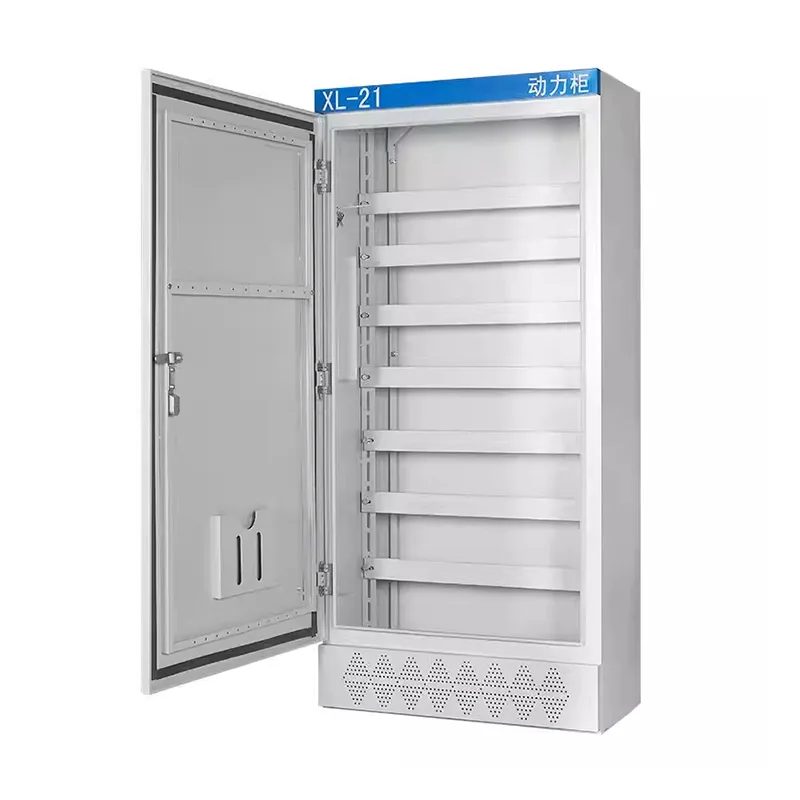
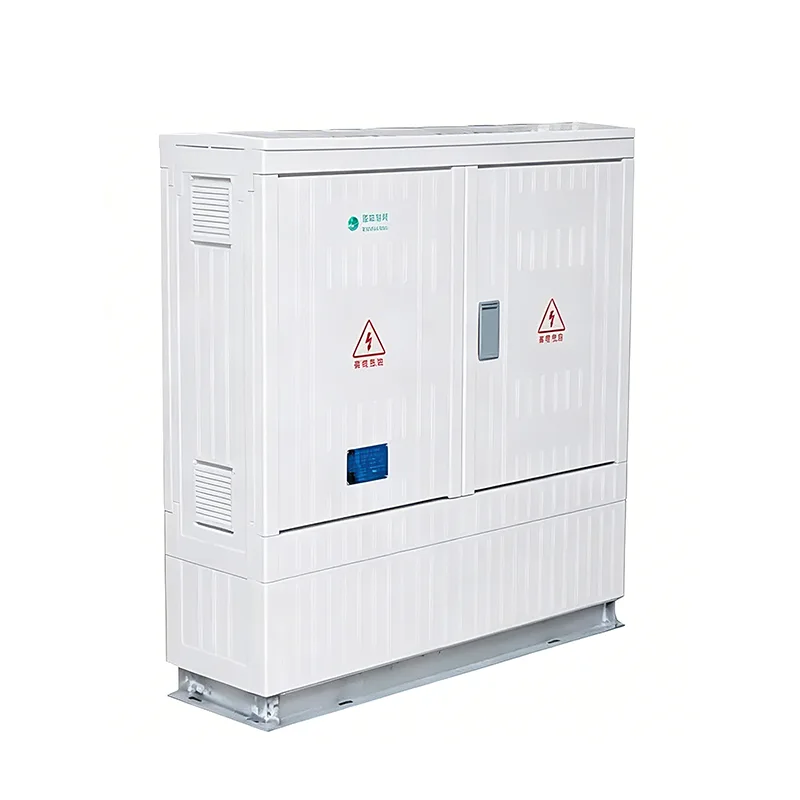
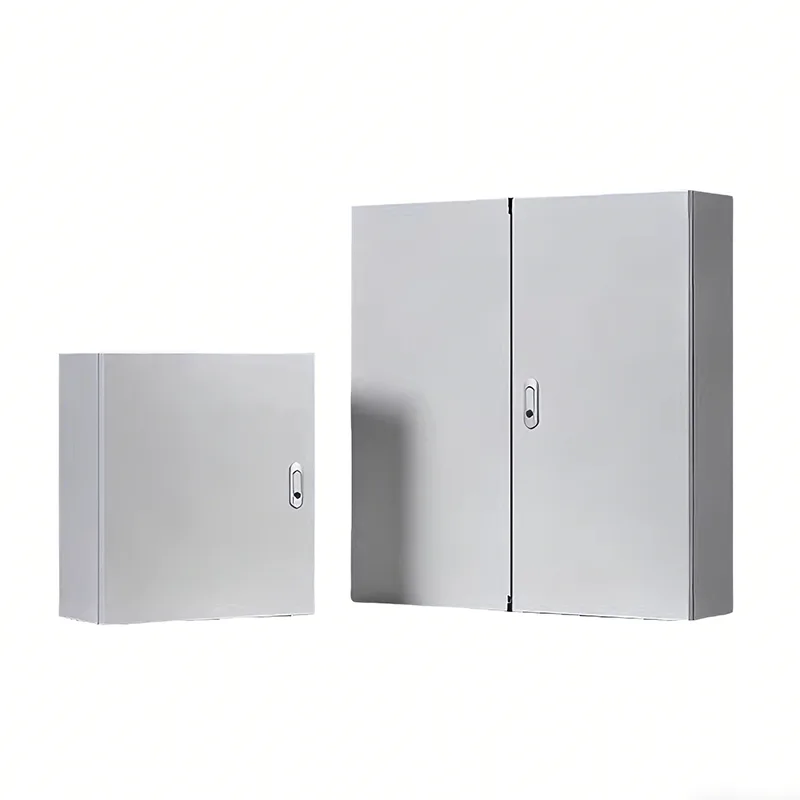
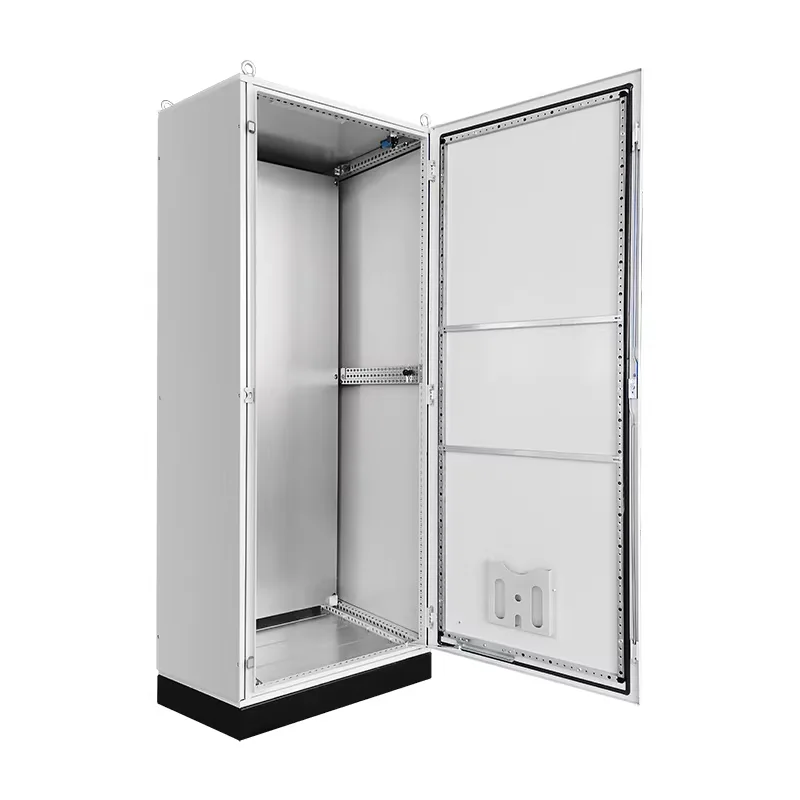
In electrical systems, securing components is only part of the story. A distribution box enclosure that is lockable may prevent unauthorized access, but operators and engineers often face challenges such as environmental exposure, heat management, and installation complexity. Simply locking the box does not address issues like water ingress, dust accumulation, or electromagnetic interference. Modern electrical environments require enclosures that combine physical protection with functional features to maintain system safety and efficiency. Wenzhou Shangming Electric Co., Ltd. provides a wide range of distribution box enclosures with engineered solutions that consider these multiple factors while maintaining high protection and operational reliability.
Why Locking Alone Isn’t Enough
Lockable distribution boxes prevent accidental or unauthorized contact, but relying solely on locks can leave other risks unmitigated:
• Environmental Damage: Rain, dust, and humidity can degrade internal components.
• Heat Buildup: High-current equipment generates heat, which may damage sensitive devices if ventilation is insufficient.
• Electromagnetic Interference (EMI): Industrial machinery can cause disruptions in unshielded enclosures.
A lockable design must therefore be complemented with structural and functional features that ensure safety and durability in diverse operating conditions.
Key Features of Modern Distribution Box Enclosures
Physical Protection
• Constructed from cold-rolled steel (1.2–2.0 mm) with anti-corrosion treatments
• IP54 and higher protection ratings
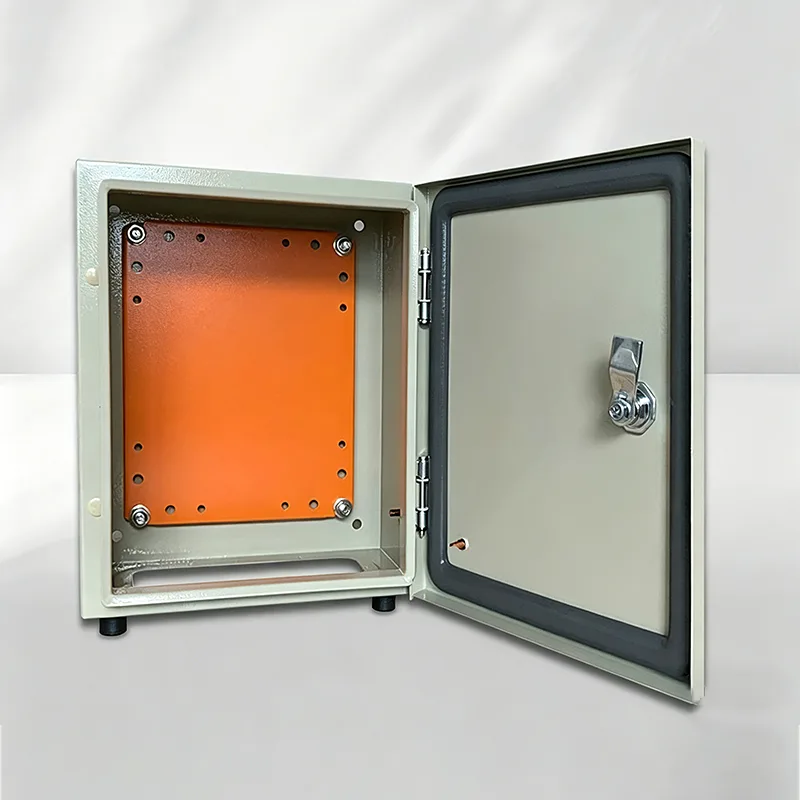
• Sealing gaskets and knockouts to prevent dust and water ingress
Safety Isolation
• Isolates high-voltage and high-current equipment from personnel
• Reduces risk of electric shock and fire
• Provides a secure mounting platform for circuit breakers and meters
Component Integration
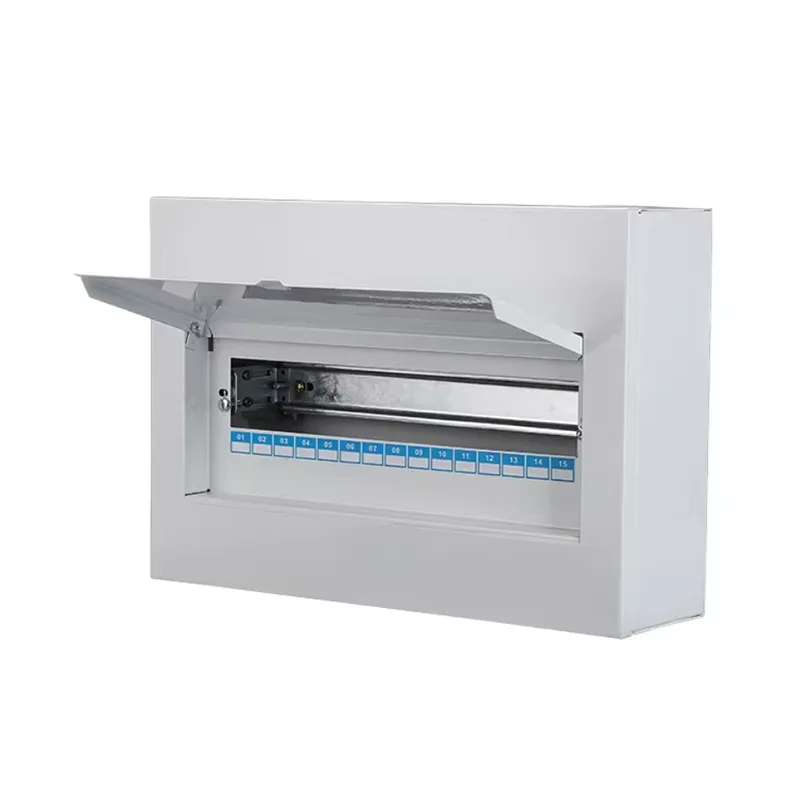
• DIN rails, mounting brackets, and pre-drilled holes for standard installation
• Supports internal wiring and heat dissipation requirements
• Removable mounting plates for easier assembly outside the cabinet
Electromagnetic Shielding
• Minimizes interference with sensitive electronic components
• Ensures stable operation of automation and monitoring systems
Application Scenarios
| Scenario | Recommended Protection | Notes |
| Commercial Building Power Distribution | IP30–IP40 | Indoor use; basic dust and accidental contact protection |
| Industrial Automation Control | IP54 | Protects against dust and splashing water; supports PLC and relays |
| Outdoor Power Distribution | IP65 or higher | Resistant to rain, dust, and environmental exposure |
| Photovoltaic/New Energy Systems | IP65 | Suitable for PV combiner boxes and energy storage systems |
| Communication & Infrastructure | IP54–IP65 | Shields electronic control systems from EMI and environmental hazards |
Selecting the Right Distribution Box Enclosure
Size and Space Planning
• Internal components should occupy no more than 80% of base plate area
• Allow space for future expansion, heat dissipation, and wiring access
Material and Corrosion Resistance
• Cold-rolled steel for standard indoor and dry environments
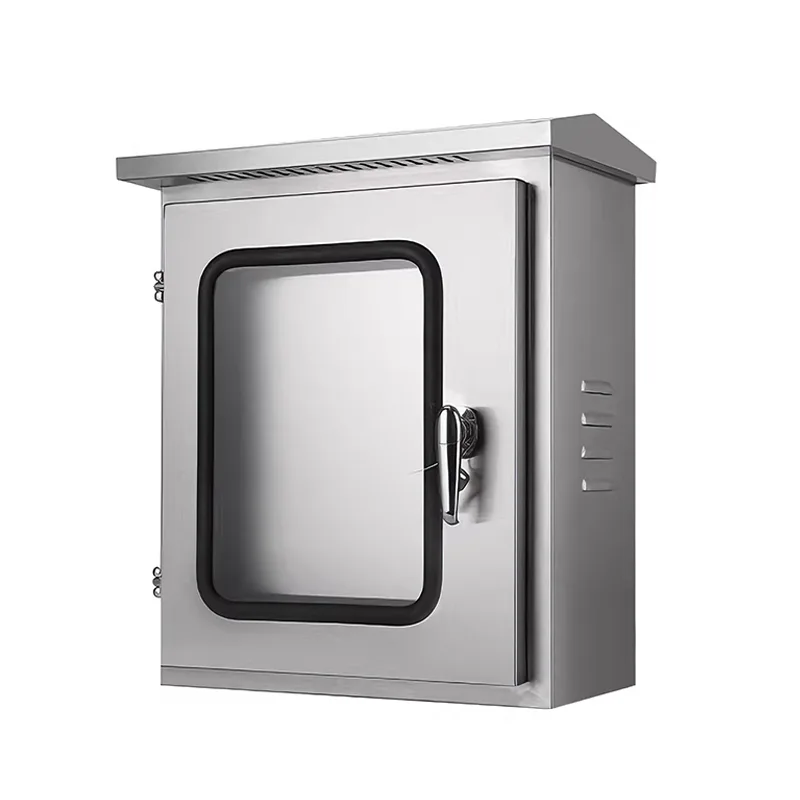
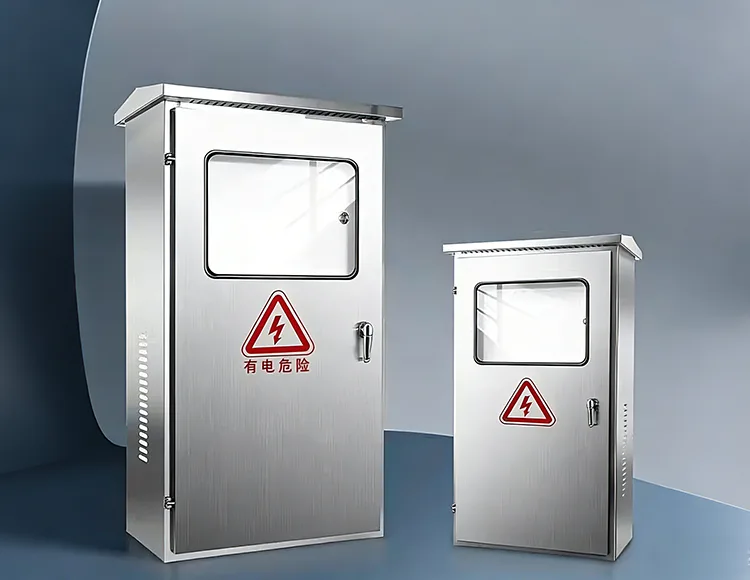
• Stainless steel 304/316 for coastal or high-salt environments
Thermal Management
• Passive cooling for minimal heat generation
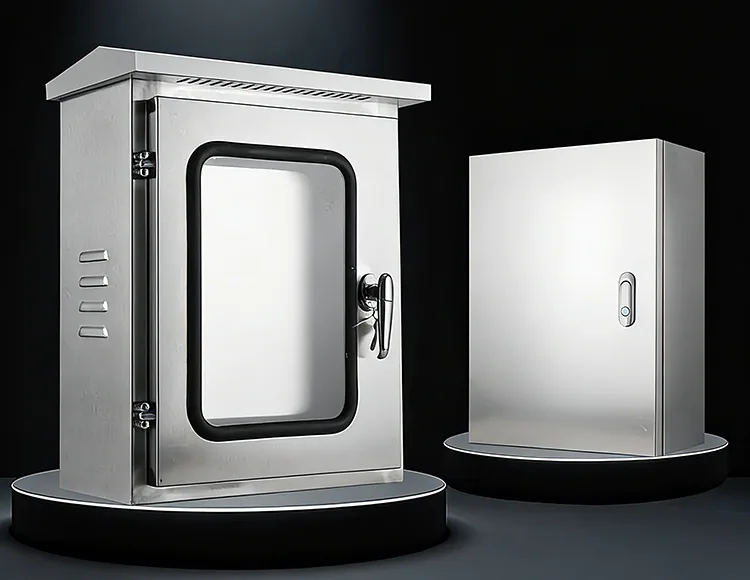
• Active cooling (ventilation louvers or axial fans) for high-current or VFD equipment
• Sunlight protection for outdoor enclosures, e.g., double-roof design
Installation Considerations
• Door orientation: reversible left/right opening for flexible access
• Cable entry/exit: top or bottom removable flange plates
• Lock types: triangular industrial lock, keyed flush, or cam lock
Why Modern Distribution Box Enclosures Are More Than Locks
Locks ensure unauthorized access is minimized, but the full value of a distribution box enclosure comes from combining multiple features:
1. Environmental protection against dust, water, and sunlight
2. Structural integrity to resist deformation or impact
3. Thermal management for heat-sensitive components
4. EMI shielding for electronic reliability
5. Ease of installation and maintenance
By integrating these features, enclosures support operational safety, system reliability, and equipment longevity beyond what a simple lock can provide.
Comparison – Lock Only vs Comprehensive Enclosure
| Feature | Lock-Only Box | Modern Distribution Box Enclosure |
| Unauthorized Access | Limited | Fully secured with adjustable locks and gaskets |
| Environmental Protection | Minimal | IP54–IP65 protection, corrosion-resistant materials |
| Thermal Management | None | Passive or active cooling options |
| Component Mounting | Minimal | DIN rails, mounting plates, pre-drilled holes |
| Electromagnetic Shielding | None | EMI shielding included |
| Ease of Maintenance | Low | Removable plates, reversible doors, accessible cable entry |
Conclusion
Are lockable distribution box enclosures enough? While locks address only one aspect of safety, modern enclosures from experienced manufacturers like Wenzhou Shangming Electric Co., Ltd. combine physical protection, thermal management, EMI shielding, and installation flexibility. Such comprehensive designs ensure system stability, protect sensitive electrical components, and allow safe and efficient operation in a wide range of industrial, commercial, and outdoor environments. Selecting enclosures with integrated features is critical for reliable electrical distribution and long-term equipment performance.
Related News
- What Makes a Carbon Steel Distribution Box Enclosure Reliable for Modern Power Systems?
- How Does a Wall Mounted Metal Electrical Distribution Box Improve Electrical Safety?
- How Does a Stainless Steel Distribution Cabinet Improve Electrical Safety and System Performance?
- Why Stainless Steel Distribution Box Enclosure Is Essential for Reliable Power Distribution Systems?
- Why Is a Galvanized Steel Distribution Box Enclosure Essential for Reliable Electrical Protection?
- Why Is Waterproof Distribution Box Enclosure Essential for Modern Electrical Protection?
Leave me a message